Facing an unexpected disaster or extreme financial hardship? You might be eligible for the Centrelink Crisis Payment right now.
This emergency financial boost provides urgent relief to help you manage essential expenses. It is designed for those in severe need.
The fastest way to get your money is applying online through myGov. Read on to discover exactly how to claim it today.
Gathering the right documents early makes a huge difference. Preparation is the key to getting your application approved quickly.
What is the Centrelink Crisis Payment?
The crisis payment is a single sum of money meant to cover urgent costs during tough times. It acts as an emergency safety net.
You receive this money on top of your regular income support. It is completely tax free and does not affect your standard payments.
However there is a strict rule you must follow. You must already get or qualify for an income support payment to access this relief.
Eligible payments include JobSeeker and the Age Pension. The Disability Support Pension and ABSTUDY Living Allowance also qualify.
If your only benefit is the Family Tax Benefit you cannot get this specific payment. You will need to look into other options.
It is crucial to understand that this is not a regular ongoing benefit. You cannot rely on this payment for long term planning.
The government treats this as a last resort measure. It exists solely to bridge the gap during sudden and traumatic life events.
Who is eligible for this emergency support?
Getting this money requires meeting strict criteria. You must be experiencing severe financial hardship at the time of your claim.
Centrelink looks at your liquid assets to determine this. This means checking how much cash you have readily available in the bank.
Severe financial hardship has a very specific definition. It means you lack the immediate funds to cover basic food and shelter.
If you have substantial savings in the bank your application will fail. Centrelink expects you to use your own resources first.
You must also be in Australia when the extreme event happens. You need to submit your claim while still living in the country.
Only specific crisis scenarios trigger this payment. Normal daily expenses or regular bills do not count as an extreme circumstance.
Understanding these rules prevents false expectations. It saves you time when you need to focus on recovering from your emergency.
Understanding extreme circumstances
Centrelink defines a crisis through four specific situations. You must fit into at least one of these categories to qualify.
- Domestic violence: You had to leave home or the responsible person was removed.
- Natural disasters: You fled due to fire, flood or community violence.
- Humanitarian entrants: You just arrived in Australia for the first time.
- Prison release: You spent at least fourteen days in custody or psychiatric care.
For natural disasters it must be unreasonable for you to return home soon. Your living arrangements must have drastically changed.
Domestic violence cases receive priority handling. Your safety is the primary concern when processing these sensitive claims.
You do not need to prove physical violence occurred. Controlling behaviour and emotional abuse are valid reasons to seek this help.
For humanitarian entrants the rules are slightly different. You must have arrived in Australia for the first time very recently.
How much money will you receive?
The exact amount depends on your current Centrelink benefit. You will get the equivalent of one week of your base payment rate.
This calculation only looks at the maximum basic rate. It does not include extra supplements or additional allowances you usually get.
Let us look at a practical example of the payout. If your base JobSeeker rate is six hundred dollars you receive that exact amount.
You will not get extra money for rent assistance or family bonuses. The crisis payment strips away all those additional supplements.
Payment amounts are updated regularly. Centrelink reviews these figures every March and September to match current living costs.
You can only receive this cash boost once per qualifying incident. Multiple claims for the exact same event will be firmly rejected.
The funds are transferred directly into your nominated bank account. This usually happens within a few days of your claim approval.
Step by step guide to claim via myGov
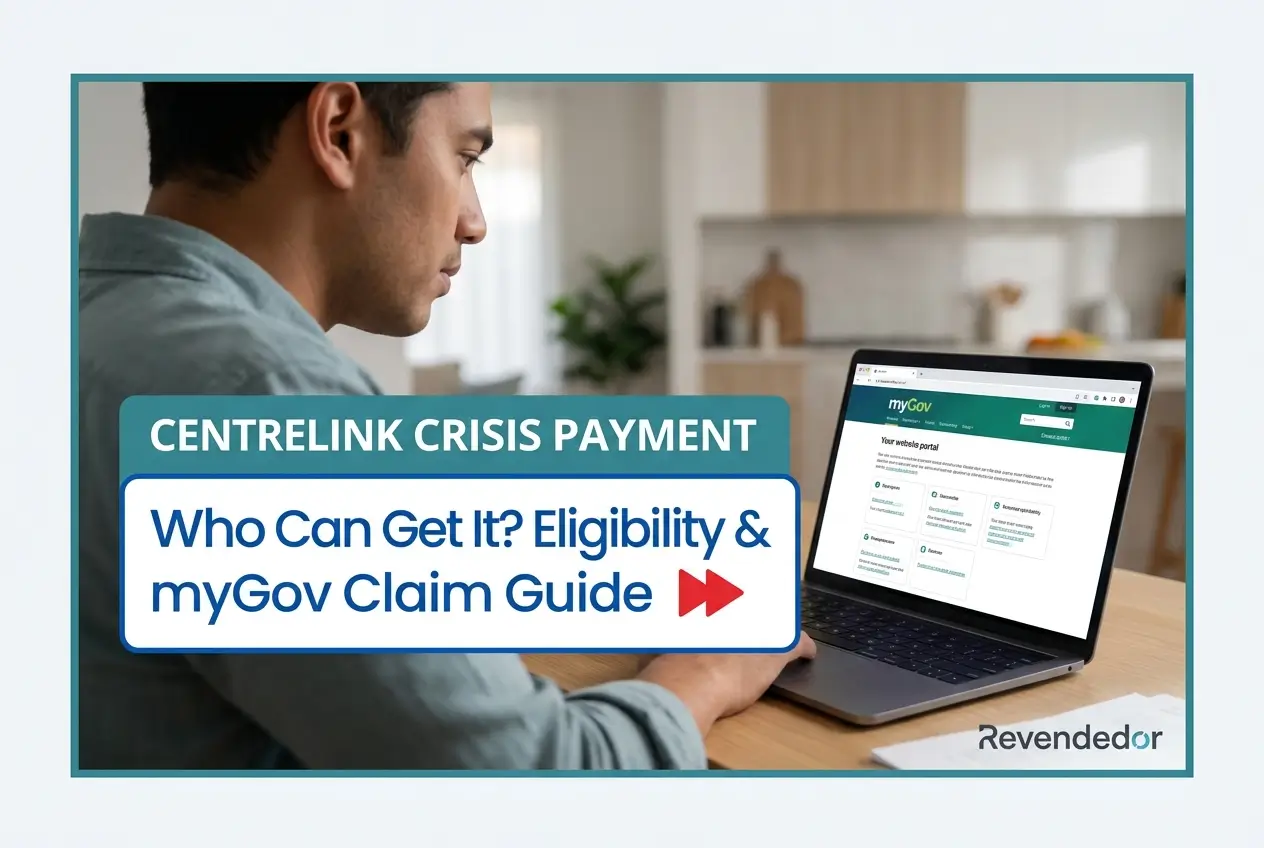
Time is critical when applying for emergency relief. The absolute fastest way to lodge your claim is online using your smartphone.
Before starting make sure your Centrelink account is linked to myGov. This will save you precious time during the application.
- Sign in: Open myGov and access your linked Centrelink account.
- Navigate: Go to Payments and Claims, then select Make a claim.
- Select category: Choose Crisis Payments and pick your situation.
- Submit proof: Answer all questions and upload your evidence.
The online system guides you through each requirement clearly. It is designed to be user friendly even if you are under immense stress.
Sometimes a social worker will need to speak with you. This is standard procedure for domestic violence cases to ensure your safety.
When uploading documents ensure photos are clear and readable. Blurry evidence will cause frustrating delays in your assessment.
A social worker might call from a private number. Always answer your phone during the days following your application submission.
Important documents and strict deadlines
You must act quickly to secure this payment. Centrelink requires you to contact them within seven days of the extreme event.
This timeline starts from the day your living arrangements changed. If you miss this first window your claim will likely fail.
The seven day contact rule is extremely rigid. If you miss this deadline Centrelink assumes your crisis has already completely passed.
You can simply call to register your intent to claim. You do not need to have all your paperwork ready on day one of the disaster.
After making initial contact you have fourteen days to submit the full claim. This gives you time to gather all necessary paperwork.
- Police reports: Essential for domestic violence or community incidents.
- Fire or flood reports: Needed for natural disaster claims.
- Release papers: Required if you just left prison or care facilities.
If gathering evidence puts you in danger tell Centrelink immediately. They have alternative ways to verify domestic violence claims.
You can easily track your claim progress on your phone. Just use the Express Plus Centrelink app or check your myGov portal.
Warning against scams and security threats
Criminals often target vulnerable people during crises. They pretend to be Centrelink staff to steal your money or identity.
Protect yourself by knowing how the government operates. Services Australia will never text or email you a direct login link.
Fraudsters use sophisticated methods to trick you. They might spoof official numbers to make their calls look entirely genuine.
Be extremely careful with social media posts offering cash bonuses. If it sounds too good to be true it is almost certainly a scam.
Centrelink will never demand a fee to release your benefits. They also never ask you to transfer money via wire services.
Never share your myGov login details with anyone. Even well meaning family members should use official nominee channels instead.
Delete any unexpected emails claiming your crisis fund is ready. The government communicates through your secure myGov inbox.
Report any suspicious messages immediately to the Scams and Identity Theft Helpdesk to protect your account.
What to do if your claim is rejected
Not everyone will qualify for the crisis payment. If your claim is denied you still have other options to get emergency help.
You can ask for an Advance Payment of your regular Centrelink benefit. This lets you access a portion of your future payments early.
Rent Assistance is another path if housing costs are your main struggle. It helps cover regular rent payments for eligible people.
Seeking help from community organisations is a smart move. Groups like the Salvation Army provide immediate food and clothing relief.
Financial counsellors offer free and confidential advice. They can help you negotiate with utility providers to stop disconnections.
State governments also run their own emergency relief programs. Check your local state website for additional grants and vouchers.
Do not let pride stop you from accessing these services. They exist specifically to support Australians facing incredibly hard times.
Final checklist and official contact numbers
Always double check your application before submitting. Ensure your bank details are correct so the money arrives without delay.
If you have a registered nominee they can handle the claim for you. They just need to use their own myGov account to log in.
Keep a written record of every interaction with Centrelink. Note down receipt numbers and the names of staff members you speak with.
Tell your bank if you are experiencing severe financial hardship. They might freeze your loan repayments temporarily.
Do not hesitate to call for help if you get stuck. The official channels are open and ready to assist you through the process.
| Service Name | Official Phone Number |
|---|---|
| General Enquiries | 132 850 |
| Indigenous Call Centre | 13 6380 |
| Multilingual Service | 131 202 |
Getting through a crisis takes time and immense patience. Use every resource available to stabilise your current living situation.
Log into myGov today to start your application or update your details. Taking fast action is the best way to secure your relief funds.