Navigating the Aged Care assessment (ACAT) process can feel overwhelming. Knowing the right steps makes getting support much easier.
This assessment is the mandatory gateway to access government-funded services. It opens the door to home support and residential care.
In this guide, we will show you exactly how to apply and what documents you need. You will also learn practical tips for wait times.
What is the Aged Care Assessment (ACAT)?
Since late 2024, the assessment system has been unified into a single process. It is designed to be simpler for older Australians.
You cannot access government-funded aged care without going through this evaluation. It is the official starting point for everyone.
The goal is to determine exactly what level of help you need right now. A trained professional will look at your daily challenges.
This assessment opens up three main types of vital support. These are Support at Home, respite care, and residential aged care.
Who is eligible for government-funded care?
Before starting your application, you must meet basic eligibility rules. The criteria focus on your age, residency and specific needs.
You must be 65 years or older to qualify for standard assistance. For Aboriginal and Torres Strait Islander people, the age limit is 50.
You also need to demonstrate a genuine need for daily help. This means you have trouble with mobility or specific health conditions.
You must hold a valid Medicare card to access these subsidised services. Permanent residency is generally required for most funding.
How to start your application online or by phone
Starting the application process is completely free of charge. You can choose the method that works best for your personal situation.
The fastest way is applying online through the official My Aged Care website. The digital form takes about 15 to 20 minutes to finish.
If you prefer speaking to a person, call My Aged Care on 1800 200 422. Lines are open Monday to Friday, and Saturday mornings.
To get face-to-face help, book an appointment with an Aged Care Specialist Officer. Simply call 1800 227 475 to arrange a meeting.
What to expect during the phone screening
Once your application is in, My Aged Care will conduct a brief phone screening. This usually happens within a few days of applying.
The goal of this quick call is to understand your most urgent needs. They need to know if you are currently safe in your own home.
They will ask how you manage basic daily tasks. This includes showering, cooking meals, and moving around your house safely.
Based on your answers, they will decide the priority level of your case. A local assessment organisation will then contact you.
How the in-home assessment visit works
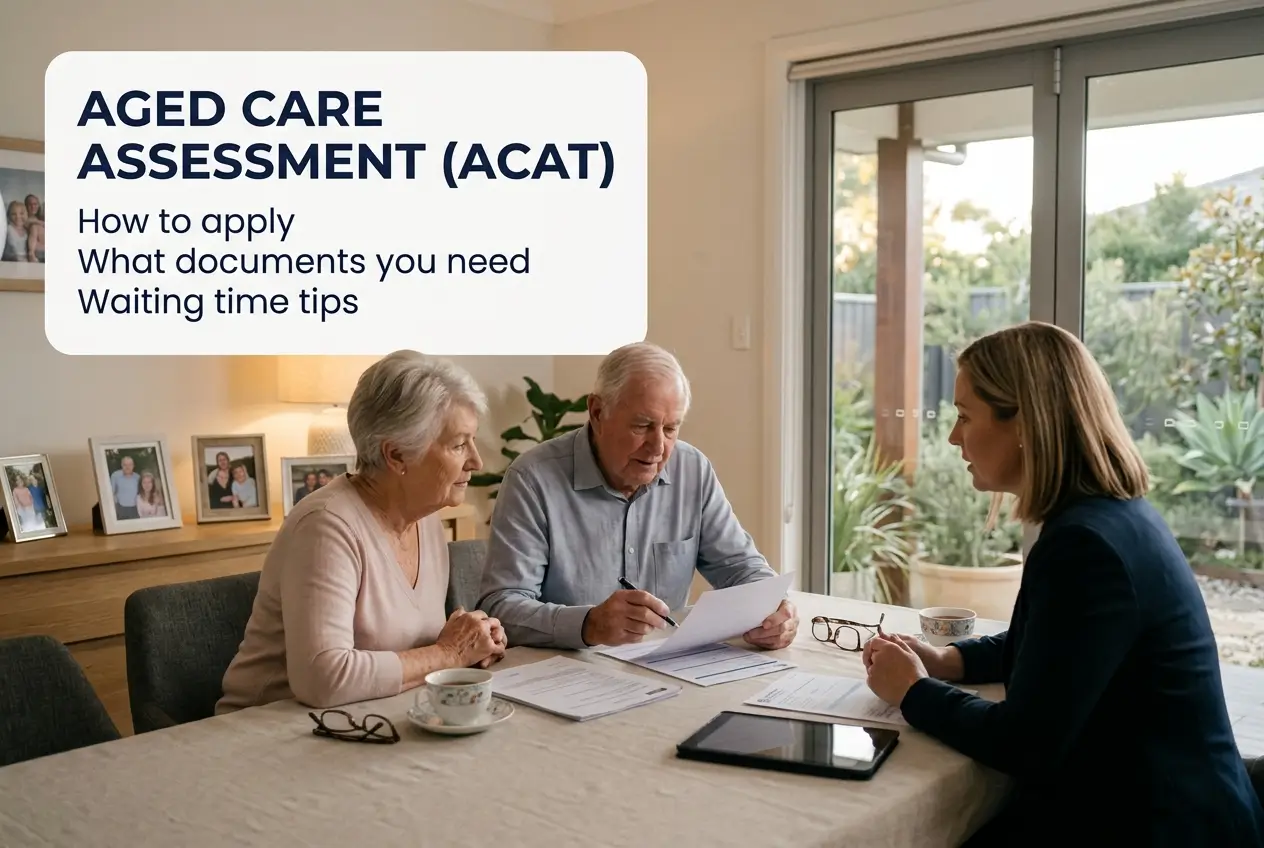
Most assessments take place in your own home. This allows the professional to see exactly how you manage in your normal environment.
The assessor will be a trained nurse, social worker, or healthcare professional. They are there to help you, not to judge your house.
During the visit, they will talk deeply about your health and goals. They want to know what support would improve your quality of life.
They might ask to look at your bathroom or kitchen setup. This helps them recommend useful home modifications like secure grab rails.
It is highly recommended to have someone with you during the visit. A family member or trusted friend can provide vital emotional support.
Essential documents you need to prepare
Being organised saves time and prevents unnecessary processing delays. Gather your paperwork well before the assessor arrives at your door.
Keep everything together in a dedicated physical folder. This makes it incredibly easy to grab the right piece of paper when asked.
Having the right identification is the most critical step. Here is a checklist of the essential documents you must have ready:
- Medicare card: Your valid physical card is mandatory.
- Secondary ID: A driver’s licence, passport, or DVA card.
- Medical history: A clear, printed list of current conditions.
- Doctor letters: Any recent referral notes from your GP.
- Treatment plans: Details of medications and ongoing therapies.
- Current support: Invoices from private help you already receive.
Having contact details for your regular health professionals is also vital. Write down your local clinic’s phone number and doctor’s name.
Understanding your Notice of Decision letter
After the assessor leaves, they write a detailed report for the government. This report determines the exact care you are approved for.
You will receive a Notice of Decision letter by post or email. This outlines the specific services you are officially eligible to receive.
Keep this letter in a very safe place alongside your other medical records. You will need to show it to local service providers later.
Do not lose your Notice of Decision letter. It is your official ticket to accessing government-subsidised aged care services.
Wait times and practical tips for success
Waiting for approval and funding can be highly stressful. Understanding the standard timeline helps you plan your next steps carefully.
Once approved for Support at Home, you might join a national queue. There is almost always a waiting list for the actual funding to start.
Wait times vary heavily depending on your region and current service demand. Some people wait several months to get their care package.
If your situation is urgent, your case can absolutely be fast-tracked. Always tell My Aged Care if you are facing a sudden health crisis.
Keep a careful written record of every single phone conversation. Note down dates, times, and the names of the staff members you speak with.
Beware of aged care scams and warning signs
Unfortunately, scammers often target older Australians navigating this system. You must protect your personal information at all times.
Legitimate assessors will always schedule their visits well in advance. They will never turn up at your front door completely unannounced.
When an official assessor arrives, they will carry formal identification. Always ask to see their government ID badge before letting them in.
My Aged Care will never ask for your bank details over a cold call. Never share financial data or transfer money to unsolicited callers.
If a caller is aggressive, hang up and report them to Scamwatch online. This helps authorities track criminals and protect vulnerable people.
Important contacts and advocacy resources
Navigating the system is much easier when you know exactly who to call. Keep these official numbers saved in your phone for quick access.
For general enquiries and checking your application status, call My Aged Care. Their main contact number is 1800 200 422.
If English is not your first language, professional help is available. Call the Translating and Interpreting Service on 131 450.
Family members looking after an older relative also need dedicated support. The Carer Gateway offers specific help on 1800 422 737.
If you feel overwhelmed or confused, independent help is entirely free. The Older Persons Advocacy Network (OPAN) can help on 1800 700 600.
Alternative options and next steps to take
Sometimes, people do not qualify for government-subsidised care right away. You still have solid options to remain safe at home.
You can start exploring private care providers in your local community. They charge commercial rates, but they offer immediate help.
Do not wait for a medical emergency to start this entire process. Applying early gives you peace of mind and secures your place in the system.
Your health and independence are your absolute top priorities. Start gathering your Medicare card and crucial medical documents today.
Visit the My Aged Care website or call them tomorrow morning. Taking this first practical step puts you in full control of your future care.