Getting your provisional P-Plate licence is a major milestone for young drivers in Australia. It provides genuine freedom on the open road.
Moving from L-plates to P-plates involves specific rules, government fees, and mandatory driving hours. These requirements change depending on your state.
We will guide you through the exact steps to pass your driving test. Learn how to secure your licence safely and avoid online scams today.
What is the P-Plate transition?
Australia relies on a strict and effective system for new drivers. The transition means moving from supervised driving to independent driving.
Instead, you progress through carefully monitored licensing stages. This approach builds your practical driving skills slowly over a long period.
The normal path goes from a Learner licence to a P1 licence. The P1 is commonly known as your Red P-plates.
After holding your Red Ps safely, you graduate to a P2 licence. This next stage is also called your Green P-plates.
Finally, you apply for your unrestricted full driver licence. Each stage comes with strict legal conditions to keep everyone safe.
Understanding the Graduated Licensing Scheme
The Graduated Licensing Scheme is a national road safety framework. However, each Australian state manages its own specific transport laws.
This scheme focuses entirely on reducing road accidents among young people. Statistics clearly show new drivers face the highest crash risks.
For example, learner drivers must always have a supervisor present. Provisional drivers can drive alone but face very strict limits.
These limits often include nighttime passenger restrictions and lower speed limits. Understanding these local rules is essential for your driving success.
Core requirements to apply for your P-Plates
Before you can ditch the L-plates, you must meet basic eligibility rules. These standard rules apply across most Australian jurisdictions.
First, you need to reach the legal minimum age requirement. This is usually seventeen or eighteen years old depending on your location.
You must also hold your Learner licence for a set period. This mandatory waiting period is typically between six and twelve months.
During this time, you have to complete your supervised driving hours. You must log every single drive officially and accurately.
The Hazard Perception Test explained
Logging your driving hours is just the first step of the journey. You must also pass two official government assessments to progress.
The first major hurdle is the official Hazard Perception Test. This is an interactive computer based assessment taken at a testing centre.
It measures your ability to spot potential dangers on the road. You will watch various video clips of real traffic situations.
You must pass this test before attempting the final practical drive. Book this computer test online through your state transport portal.
What to expect in your practical driving test
The second assessment is the highly anticipated practical driving test itself. An official government examiner will sit in the car with you.
They will direct you through a predetermined set route in your local area. You must follow their instructions carefully and safely.
The examiner will deeply check your basic vehicle control and parking skills. They will also monitor your overall traffic safety awareness.
You will be thoroughly tested on lane changes, intersection management, and reverse parking. Speeding during the test is an instant fail.
Stay completely calm and focus on the road ahead of you. Pass this practical assessment, and you finally get your P-plates.
Watch this helpful video to understand the driving test process better.
Preparing your vehicle for test day
You must provide a safe and fully roadworthy vehicle for your practical test. The examiner will inspect the car before you start driving.
- Lights: All indicators and headlights must work perfectly.
- Tyres: Must have adequate tread depth and correct air pressure.
- Safety: Seatbelts must function properly for both occupants.
The windscreen must be completely clean and free of large cracks. If your car fails this check, your test is cancelled immediately.
You will also lose your entire booking fee if the vehicle is unsafe. Many learners choose to use their driving instructor’s car to avoid this.
Logbook rules and mandatory supervised hours
Your official learner logbook is a highly critical legal document. You absolutely cannot book your practical test without finishing it completely.
The required supervised driving hours change drastically by state. Night driving hours are also a mandatory requirement everywhere in the country.
Make sure every single entry is accurate and signed properly by your supervisor. Falsifying logbook entries is a very serious criminal offence.
Most states now offer official digital logbook smartphone applications. These official apps are much safer and easier to track than paper books.
State by state breakdown of driving rules
Because transport is managed locally, rules vary widely across Australia. Always check your local transport authority website for the latest updates.
The table below outlines the minimum supervised hours and age requirements. Remember that some rural areas may offer special age exemptions.
| State | Supervised Hours | Min. Age | Official Website |
|---|---|---|---|
| NSW | 120 (20 night) | 17 | service.nsw.gov.au |
| VIC | 120 (20 night) | 18 | vicroads.vic.gov.au |
| QLD | 100 (10 night) | 17 | tmr.qld.gov.au |
| WA | 50 (5 night) | 17 | transport.wa.gov.au |
| SA | 75 (15 night) | 17 | sa.gov.au |
| TAS | 50 to 80 hours | 17 | transport.tas.gov.au |
| ACT | 100 (10 night) | 17 | accesscanberra.act.gov.au |
| NT | No logbook needed | 16 | nt.gov.au |
Check the specific fee schedule on your local state website. Concession card holders may be eligible for significant testing fee discounts.
How to book your driving test online
Securing a spot for your driving test can be very frustrating. Wait times are often incredibly long in major Australian cities.
You must use the official state online portal to book your test. Have your Learner licence number and logbook details completely ready.
Test fees vary significantly depending on where you actually live. You usually pay this fee securely online during the booking process.
Check the booking portal frequently for sudden cancellation slots. This is the absolute best way to secure an earlier test date.
Arrive at least fifteen minutes early on your actual test day. Bring your physical logbook if you do not use the application.
Beware of online driving test scams
Unfortunately, scammers aggressively target young drivers eager to get their licence. You must proactively protect your personal data and your money.
Never use third party websites to book a test or pay fees. Always ensure the website address safely ends in gov dot au.
Scammers frequently copy official government logos to look completely legitimate. Be very careful when clicking on random search engine advertisements.
Criminals often promise a guaranteed pass or a fake licence for cash. These tempting offers are entirely fraudulent and highly illegal.
Never share your licence number or phone verification codes with strangers. If you get scammed, contact your state authority immediately for help.
Always report fraud directly to Scamwatch. If your identity is stolen, call IDCARE immediately for free national support.
Free driving lessons and financial support
Getting your licence can be a very expensive process. However, there are proven ways to reduce the overall financial burden significantly.
Look into government funded programs available in your local area. Some programs offer a free driving lesson to eligible learners.
Practice driving in all weather conditions with a fully accredited driving instructor. This builds real confidence behind the wheel quickly.
Take practice hazard perception tests online before your real exam. Familiarity with the software reduces your anxiety on test day.
Next steps after getting your P-Plates
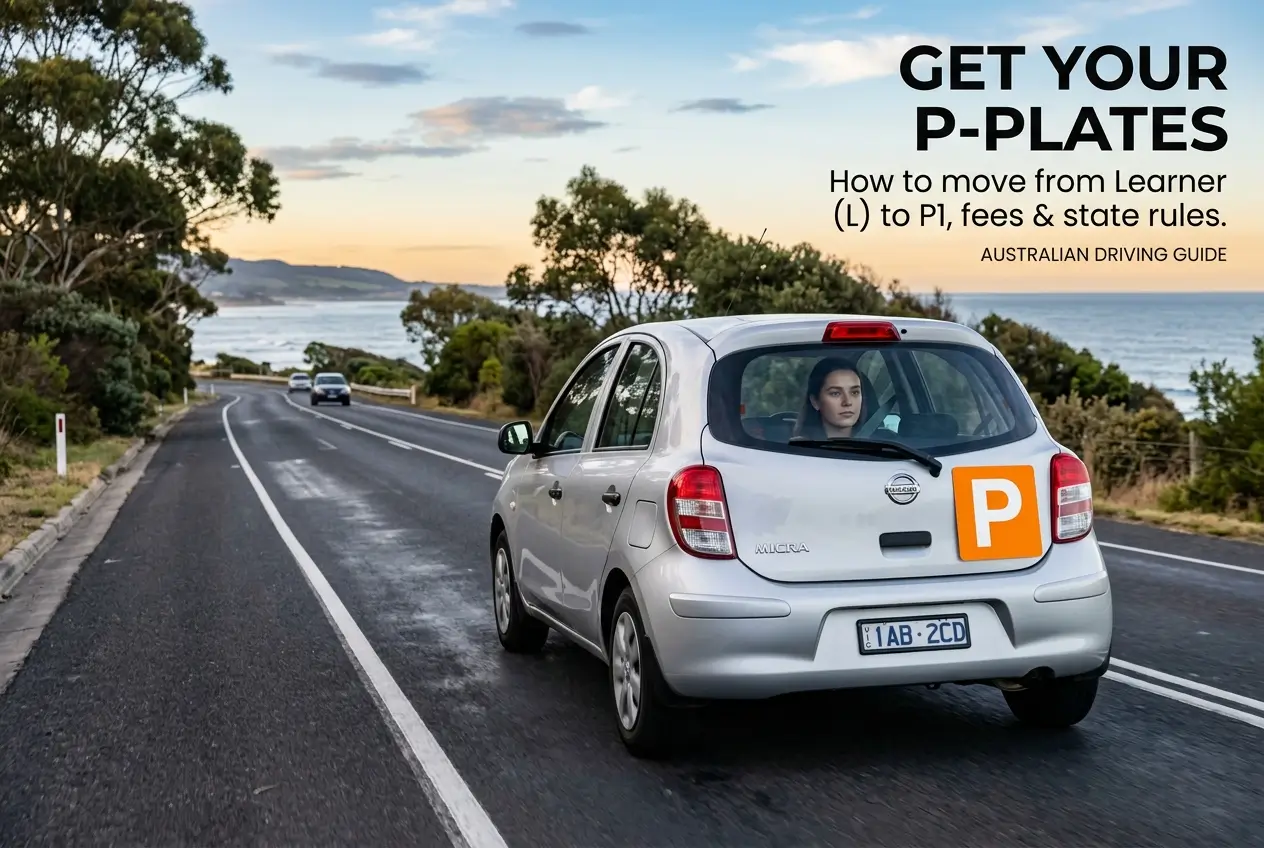
Once you pass the test, the real responsibility finally begins. You must display your P-plates clearly on the outside of your car.
Provisional drivers face very strict rules compared to fully licensed drivers. You must consistently follow these specific safety regulations.
- Alcohol: Maintain a strict zero blood alcohol limit at all times.
- Phones: Mobile phone use is completely banned, including hands-free.
- Speeding: Your driver licence can be suspended instantly for minor offences.
Drive safely and follow all road rules without any exceptions. Enjoy your new independence responsibly and keep your driving record perfectly clean.
Your next step is to check your local transport portal today. Confirm your logbook hours are correct and book your driving test safely online.
Leave a Reply